

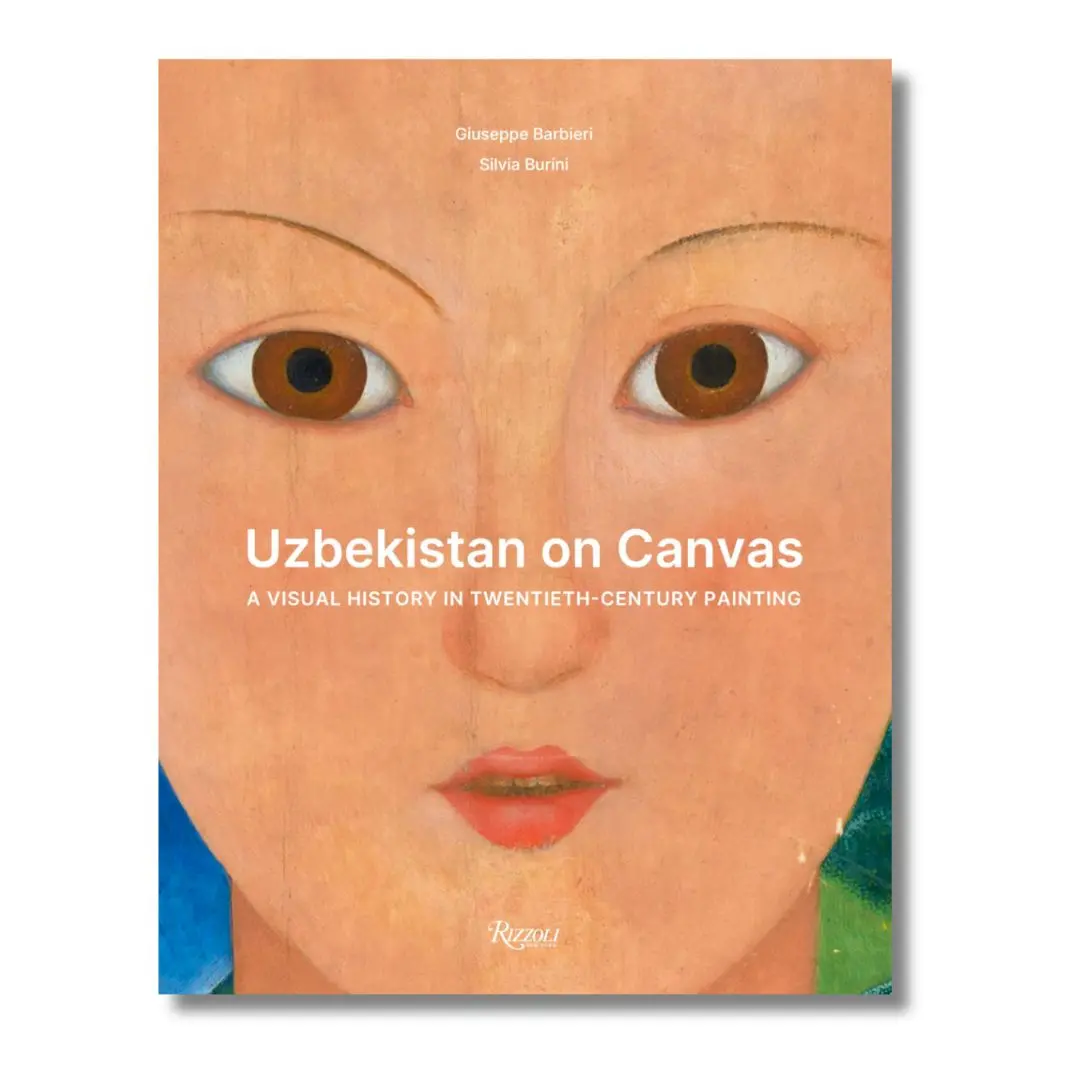
This richly illustrated catalog explores the vibrant and largely overlooked history of twentieth-century painting in Uzbekistan, offering a compelling introduction to a unique artistic tradition shaped by cultural exchange, political transformation, and modernist experimentation.
Focusing on the first half of the twentieth century, the book examines the emergence of what has been described as the “Avanguardia Orientalis,” a movement that brought together artists of diverse backgrounds – Uzbek, Russian, Armenian, Azerbaijani, and others – who engaged in a dynamic dialogue between European modernism and the artistic traditions of Central Asia. Their work reflects both avant-garde experimentation and the evolving realities of life within the Soviet Union, ultimately leading to the rise of Socialist Realism.
Organized around key themes ranging from everyday life and portraiture to landscapes and cultural identity, the catalog presents a wide array of paintings alongside rare historical photographs and comparative studies. These works highlight the richness of a visual language shaped by centuries-old traditions, Islamic and pre-Islamic heritage, and the enduring legacy of the Silk Road.
Combining scholarly research with exceptional visual material, this publication offers an essential perspective on a significant yet underrepresented chapter in twentieth-century art history, making it a valuable resource for collectors, scholars, and anyone interested in global modernism.


Reviews
There are no reviews yet.