

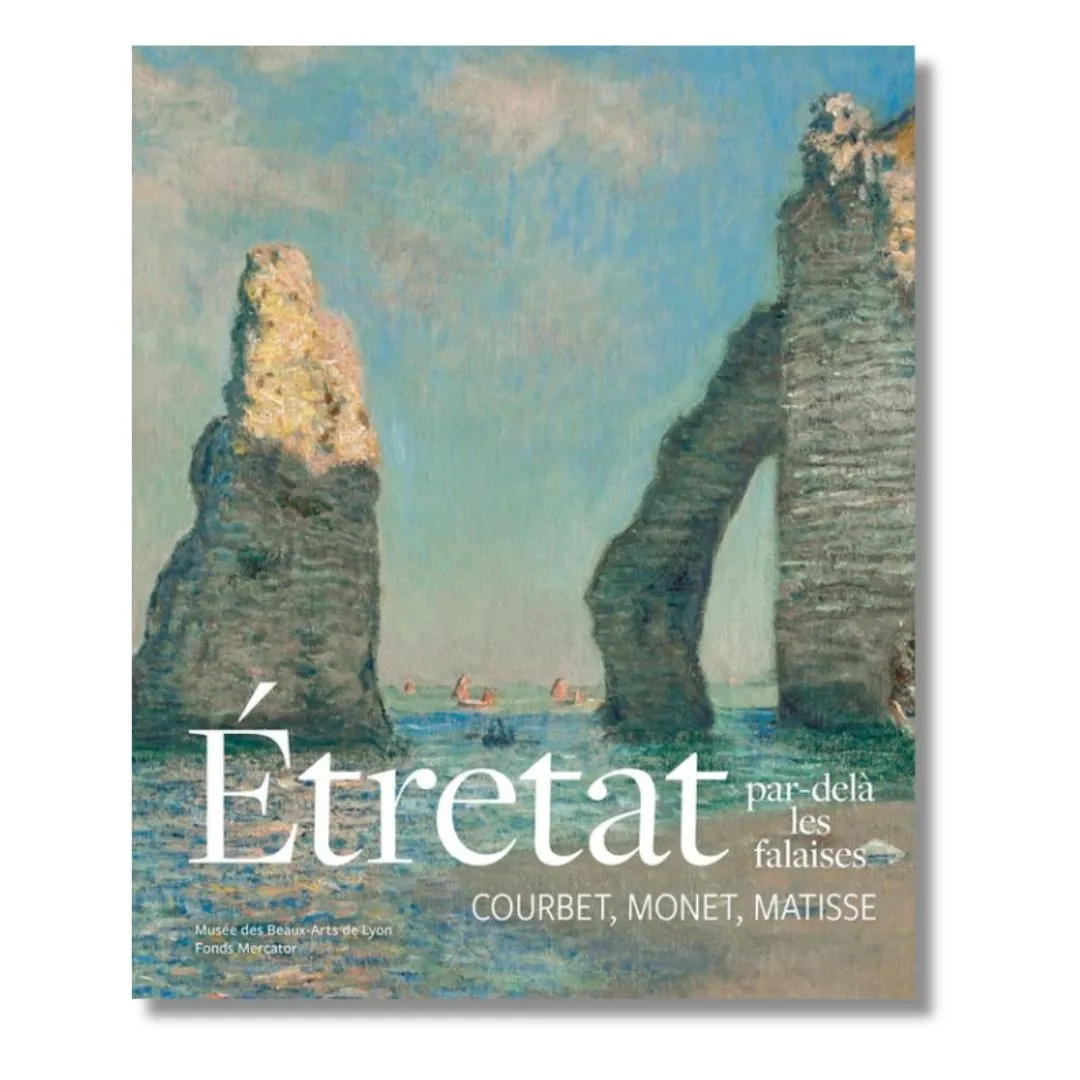
This exhibition catalog explores how the dramatic cliffs surrounding the Normandy seaside town of Étretat became one of the most iconic landscapes in modern European art.
From its discovery by Romantic artists in the 1820s to its enduring fascination for painters, writers, photographers, and composers, the Normandy fishing village gradually acquired the status of an artistic myth. Its monumental chalk cliffs, natural arches, changing light, and turbulent sea attracted generations of artists including Eugène Delacroix, Camille Corot, Gustave Courbet, Claude Monet, and Henri Matisse.
At the heart of the exhibition are four major paintings created at Étretat: two of Gustave Courbet’s celebrated Waves from 1869–1870 and Claude Monet’s Le Déjeuner of 1868–1869 and Mer agitée à Étretat of 1883. These works reveal the crucial role the Normandy coast played in the development of new approaches to landscape painting during the 19th century.
Bringing together approximately 150 works and documents, including paintings, drawings, photographs, and archival material, the catalog traces more than a century of artistic responses to Étretat, from Romanticism and Realism through Impressionism and modern art. It also examines the contribution of writers such as Victor Hugo, Gustave Flaubert, Guy de Maupassant, and Maurice Leblanc to the creation of Étretat’s cultural identity.
From Courbet and Monet to Matisse and later photography, Étretat, par-delà les falaises reveals how a small coastal village became both an artists’ destination and one of the defining landscapes of the modern imagination.




Reviews
There are no reviews yet.