

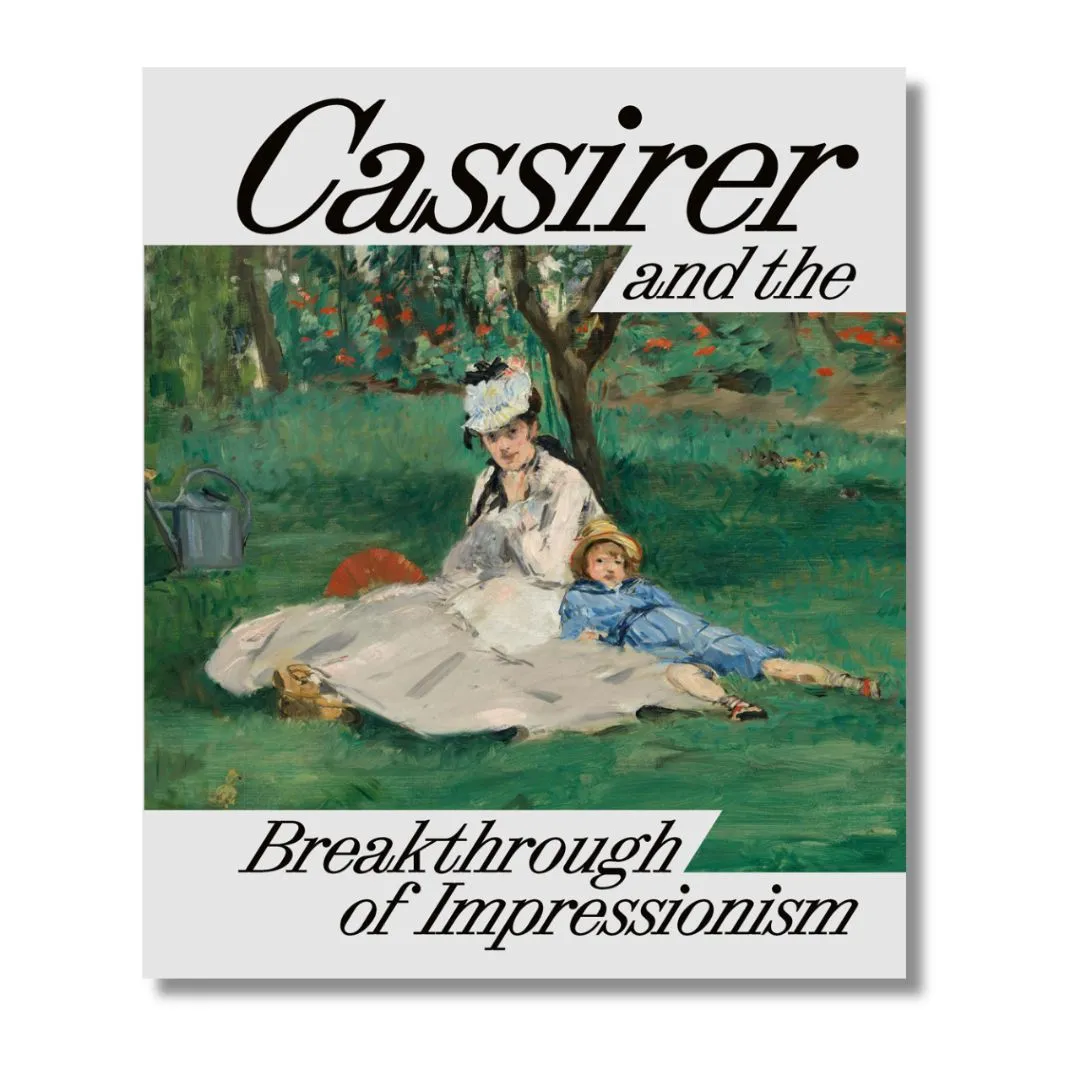
Published in conjunction with Cassirer and the Breakthrough of Impressionism at the Alte Nationalgalerie in Berlin, this richly illustrated exhibition catalog explores the decisive role of art dealer and gallerist Paul Cassirer (1871–1926) in establishing Impressionism and modern art in Germany.
Through his influential Berlin gallery and an ambitious exhibition program, Cassirer introduced German audiences and collectors to leading figures of French Impressionism and Post-Impressionism, including Claude Monet, Édouard Manet, Edgar Degas, Pierre-Auguste Renoir, Paul Cézanne, and Vincent van Gogh. His advocacy helped transform the reception of these artists in Germany and contributed to the formation of important museum collections, including that of the Nationalgalerie.
The volume also examines Cassirer’s support for German Impressionism and the Berlin Secession, particularly artists such as Max Liebermann, Lovis Corinth, and Max Slevogt. His interests extended further into early modernism and the avant-garde, encompassing artists including Edvard Munch, Ernst Ludwig Kirchner, Paula Modersohn-Becker, Ernst Barlach, and August Gaul.
Featuring more than 200 illustrations and contributions by leading scholars, the catalog presents Cassirer as a central figure in the cultural networks that shaped the reception of Impressionism and modern art in early twentieth-century Germany. It offers a broader history of Impressionism told through the dealer, exhibitions, artists, collectors, and museums that helped turn a once-radical movement into an essential part of the modern canon.





Reviews
There are no reviews yet.