

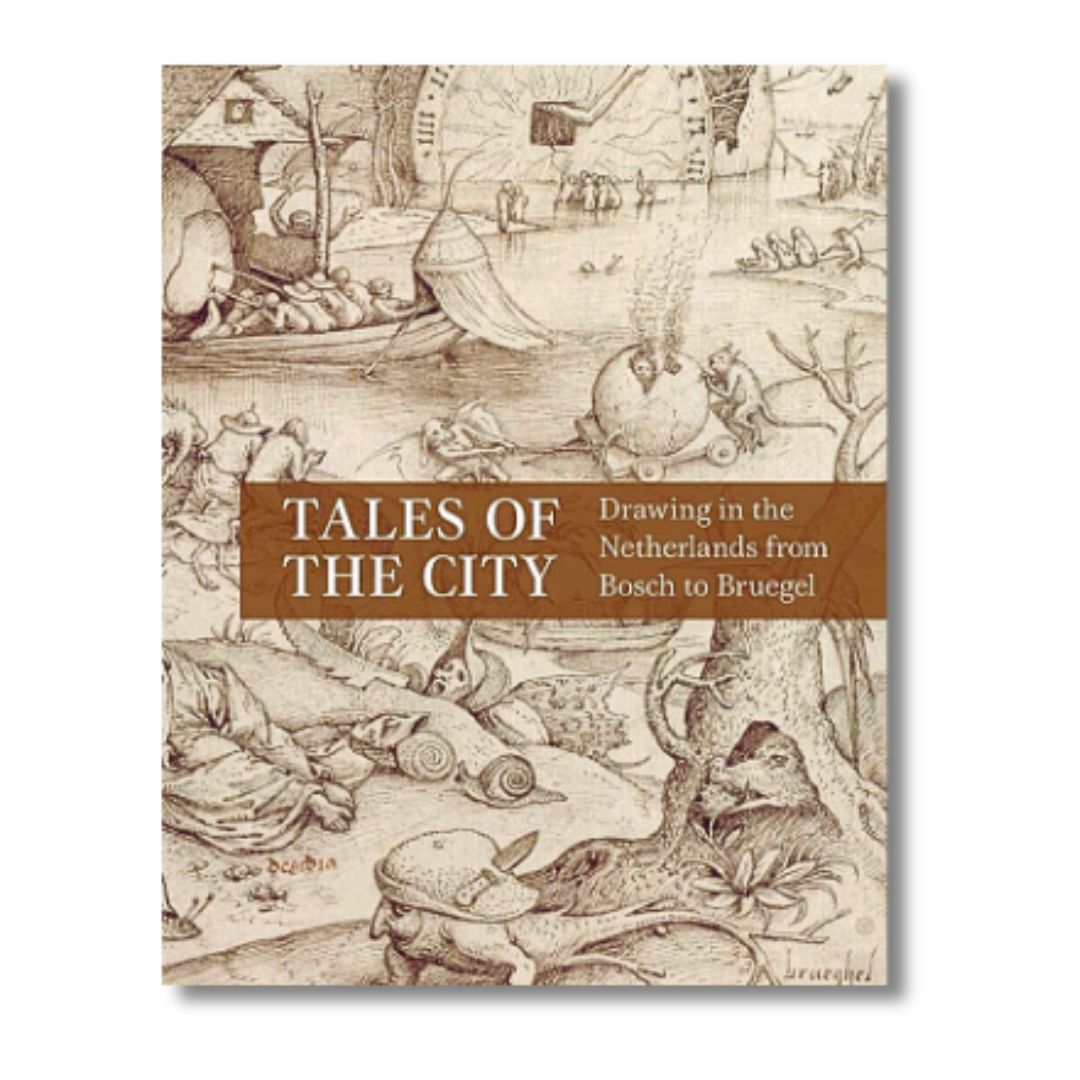
This major museum publication documents a landmark collaboration between The Cleveland Museum of Art and the Albertina Museum in Vienna, bringing together exceptional holdings of early Netherlandish drawings. The volume offers a focused study of drawing in the Low Countries from the late fifteenth to the mid sixteenth century, situating works by Bosch, Bruegel, and their contemporaries within the rapidly transforming urban culture of the period.
Rather than treating drawing as a secondary medium, the catalog presents it as a central vehicle of communication in a society shaped by expanding cities, trade networks, and shifting religious identities. Essays examine how drawing functioned across multiple contexts, from preparatory studies and workshop records to independent works of art and sources for prints that circulated widely across Europe.
Particular attention is given to the urban environment as both subject and framework. The publication explores how artists responded to civic identity, Protestant reform, devotional imagery, and the visual construction of community. Themes of chiaroscuro drawing, workshop practice, and the transmission of ideas through prints and portable media reveal a culture intensely engaged with experimentation and exchange.
Richly illustrated and grounded in new scholarship, this exhibition catalog offers an essential contribution to the study of Northern Renaissance art. It serves as a valuable reference for collectors, libraries, and researchers interested in Netherlandish drawing, print culture, and the visual language of early modern urban life.



Reviews
There are no reviews yet.