

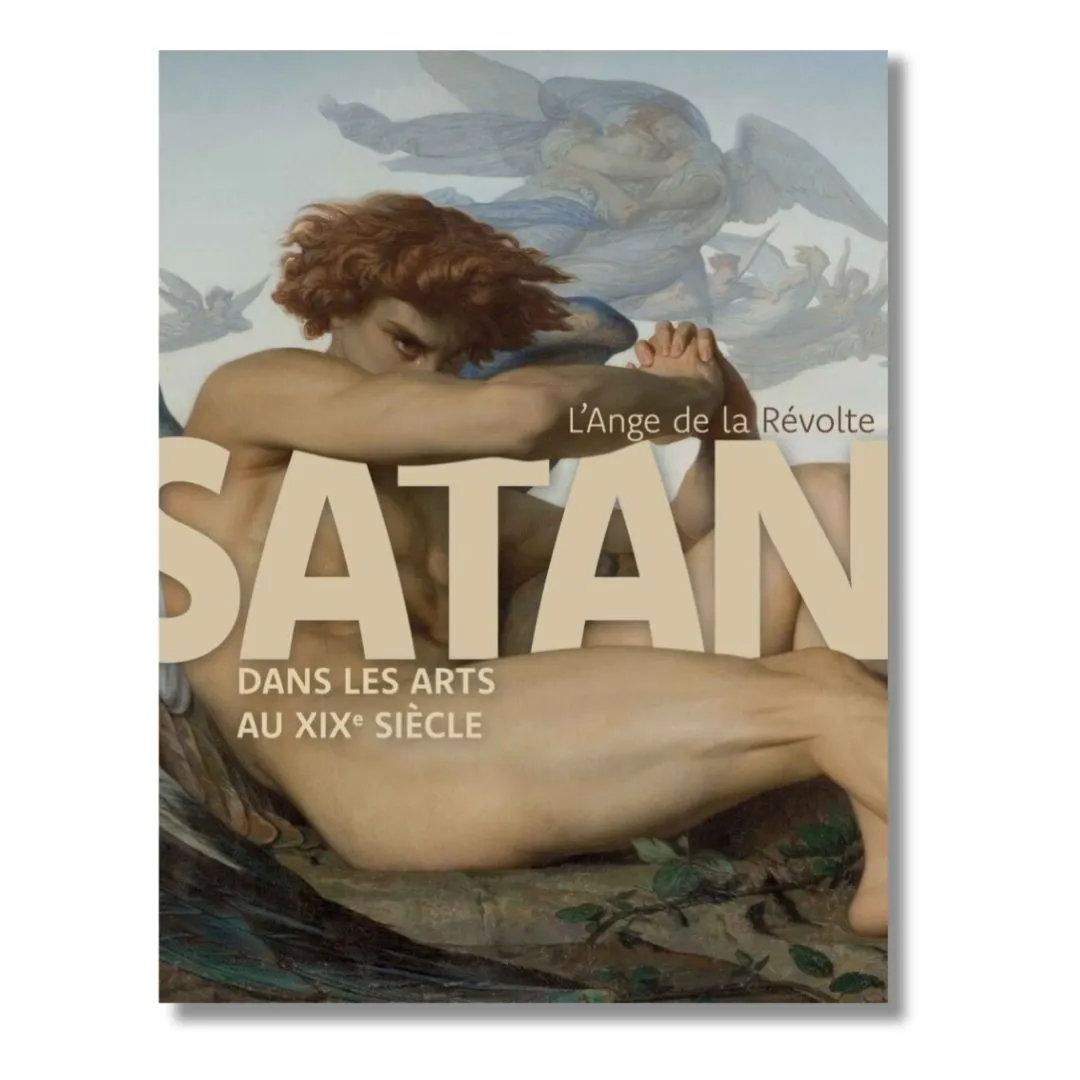
This exhibition catalog explores the remarkable transformation of Satan in 19th-century art.
Long portrayed as a terrifying embodiment of evil, Satan acquired a radically different identity during the Romantic era. As Enlightenment thought and political and social upheaval loosened the figure’s exclusively religious associations, artists increasingly reimagined the fallen angel as a solitary, defiant, and sometimes sublime figure. Inspired by John Milton’s Paradise Lost and later by writers including Goethe, Victor Hugo, and Charles Baudelaire, Satan became associated with rebellion, individual freedom, melancholy, and resistance to established authority.
Bringing together painting, sculpture, works on paper, decorative arts, and illustrated books, the exhibition traces this evolution from traditional Christian iconography to Romantic and Symbolist interpretations of the devil. It examines the emergence of the Romantic fallen angel, Satan as a figure of political and social revolt, and the increasingly psychological and introspective representations that appeared toward the end of the century.
Featuring works drawn from major collections including the Musée du Louvre, Musée d’Orsay, and the Royal Academy of Arts, L’Ange de la révolte offers a fascinating study of one of the most provocative figures in 19th-century European art and the changing cultural ideas embodied in his image.



Reviews
There are no reviews yet.