

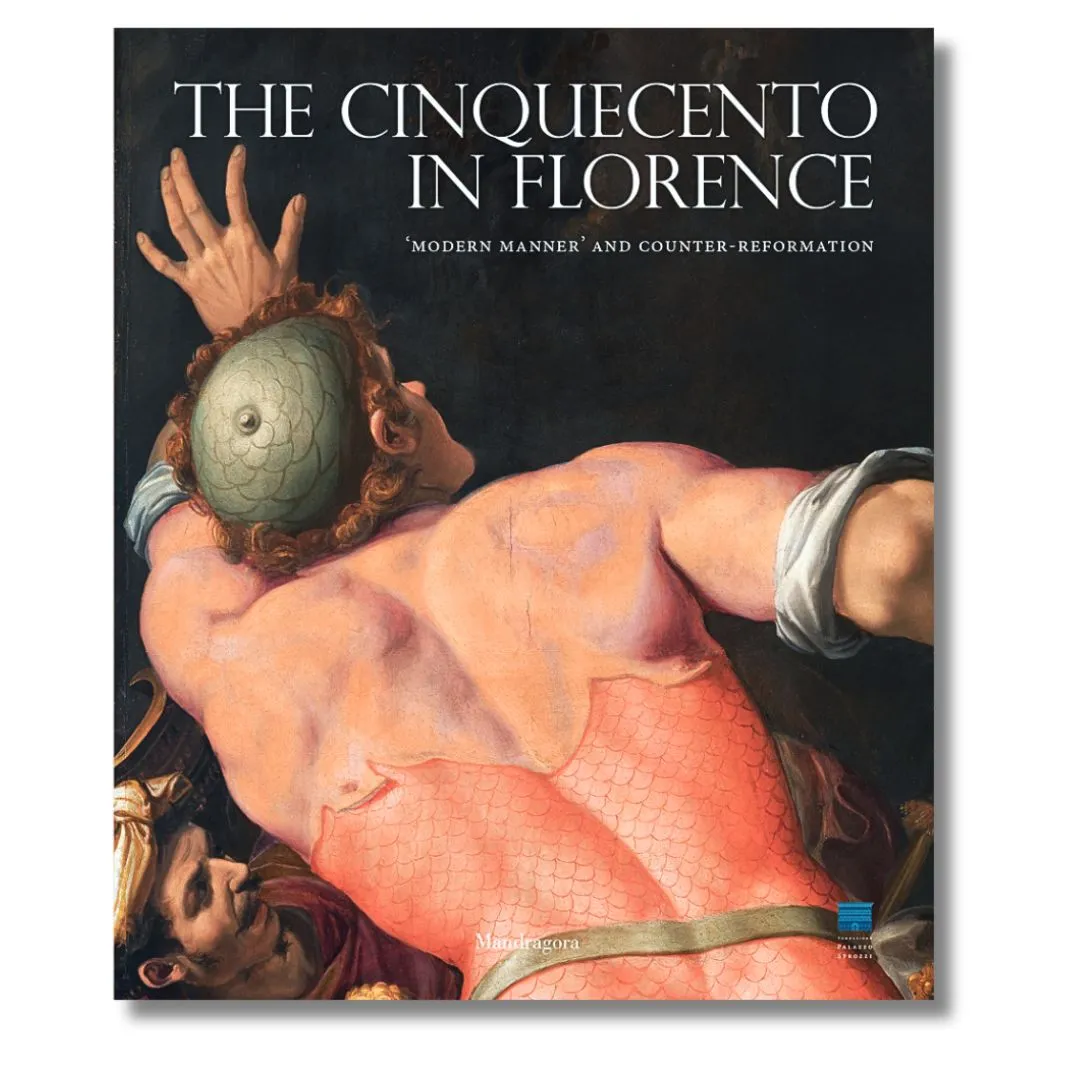
This richly illustrated exhibition catalog examines Florentine art in the second half of the 16th century, a period shaped by the sophisticated visual language of Mannerism, the religious transformations of the Counter-Reformation, and the cultural ambitions of the Medici court.
Edited by Carlo Falciani and Antonio Natali, the volume explores the development of painting, sculpture, and drawing in Florence through the work of leading artists including Bronzino, Pontormo, Giorgio Vasari, Giambologna, Bartolomeo Ammannati, and Andrea del Sarto. Their achievements reveal the extraordinary artistic experimentation that flourished in Florence during the later Renaissance.
Particular attention is given to the relationship between artistic innovation and the religious and political climate following the Council of Trent (1545–1563). As the Catholic Church responded to the Protestant Reformation, artists confronted changing expectations concerning religious imagery while continuing to develop the elegance, technical virtuosity, and complex compositions associated with Florentine Mannerism.
The catalog also examines the influential role of Francesco I de’ Medici and the Medici court in shaping the artistic culture of late 16th-century Florence. Court patronage encouraged ambitious decorative programs, sophisticated allegorical imagery, and remarkable achievements in painting and sculpture.
Bringing together 150 color illustrations and substantial art historical scholarship, this publication offers a detailed examination of the final decades of the Florentine Renaissance and the transition toward the artistic developments of the Baroque period.


Reviews
There are no reviews yet.