

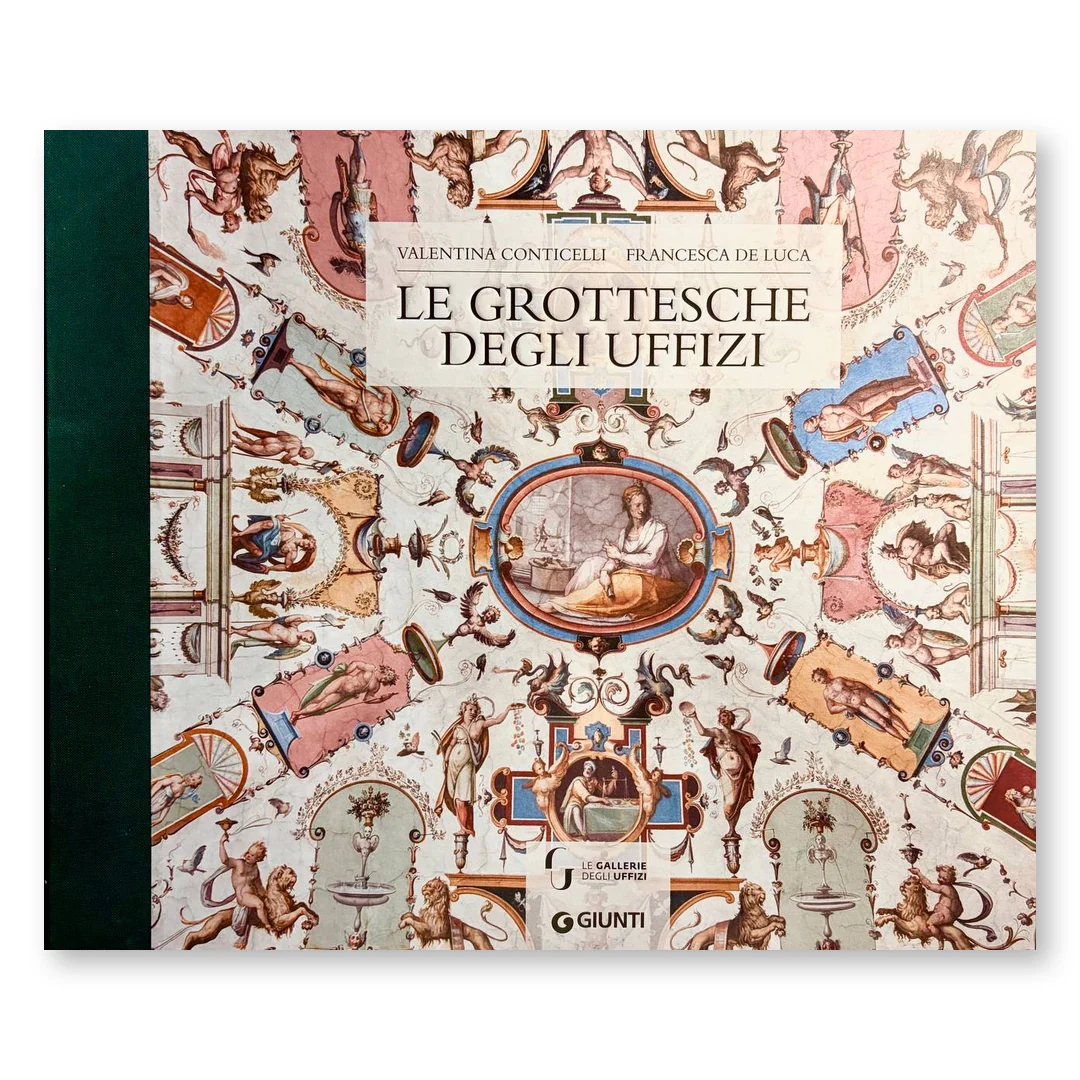
This richly documented museum art history volume explores the spectacular painted ceilings of the Uffizi Gallery in Florence, revealing one of the museum’s most remarkable yet frequently overlooked artistic treasures. The elaborate grotesque decorations covering the vaulted corridors combine Renaissance imagination, classical mythology, symbolic imagery, and the sophisticated decorative traditions of the Medici court.
The frescoes of the East Corridor, executed between 1579 and 1581, were initially painted by Antonio Tempesta and subsequently continued by Alessandro Allori and his workshop. Inspired by the rediscovery of ancient Roman decorative painting, these compositions feature fantastical creatures, masks, monsters, animals, fauns, imaginary architecture, and mysterious landscapes, arranged in intricate ornamental patterns.
The book also examines the painted decorations of the South and West Corridors, completed during the Seicento. These later fresco cycles introduce new artistic themes celebrating the history and achievements of Grand Ducal Tuscany, reflecting the political and cultural ambitions of the Medici dynasty.
Through detailed photographic documentation and art historical analysis, Francesca De Luca and Valentina Conticelli investigate the iconography, artistic techniques, and historical development of the Uffizi’s decorative program. Particular attention is devoted to the complex symbolism of the grotesques and their relationship to Renaissance interpretations of classical antiquity.
Published by Giunti in 2018, this volume offers a distinctive perspective on Florentine Renaissance art, Mannerist decoration, Medici patronage, and the architectural heritage of the Uffizi Gallery, making it a valuable reference for collectors and readers interested in Italian fresco painting and museum history.



Reviews
There are no reviews yet.