

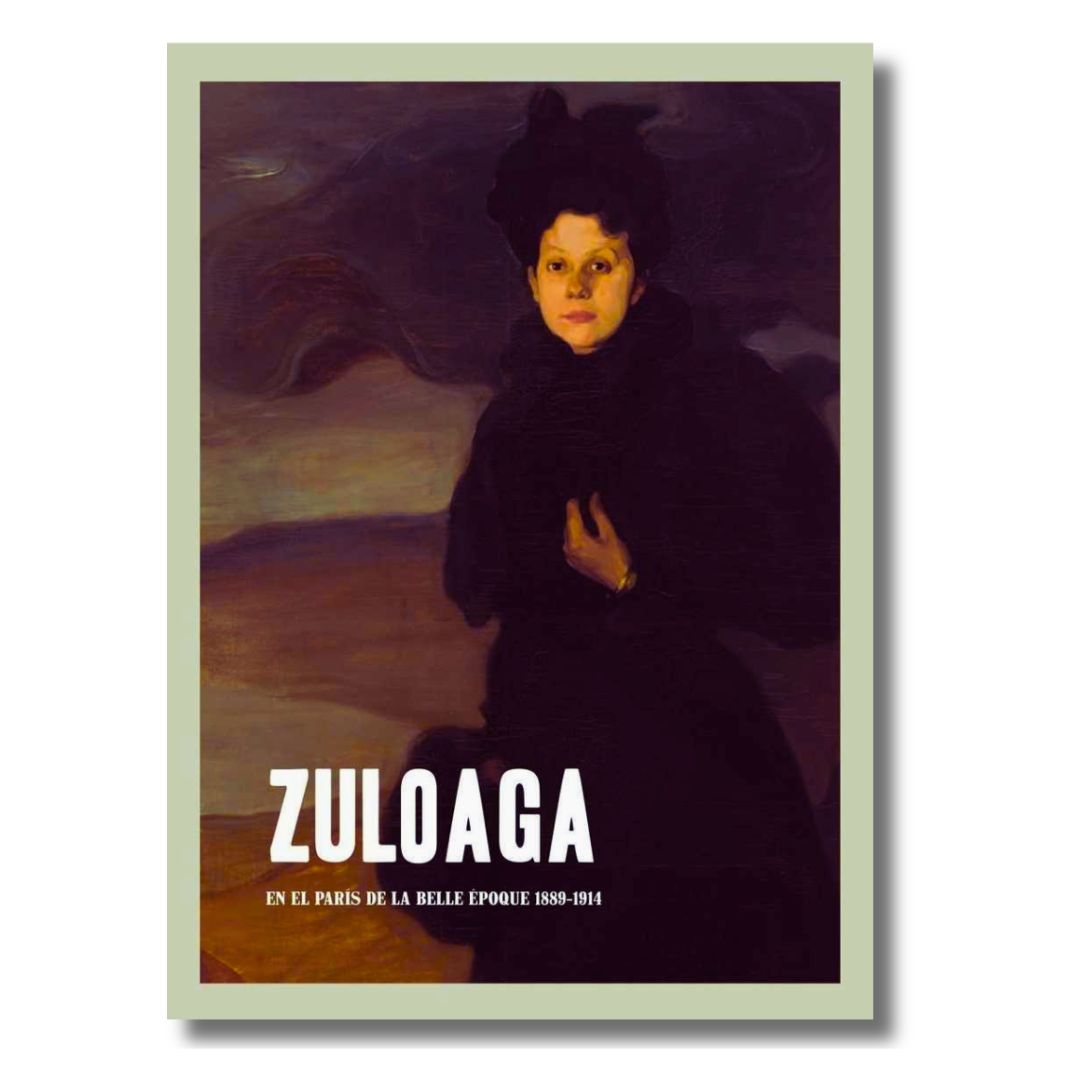
This richly illustrated catalog explores the formative Parisian years of Ignacio Zuloaga, one of the most distinctive Spanish painters of the late nineteenth and early twentieth centuries. Focusing on the period between 1889 and 1914, the publication traces Zuloaga’s immersion in the cultural and artistic environment of Belle Époque Paris, a city that profoundly shaped his artistic identity.
The catalog highlights Zuloaga’s relationships with leading artists and intellectuals of the period, including Toulouse‑Lautrec, Rodin, Degas, Gauguin, Rusiñol, and Casas, and traces how these encounters shaped his evolving style. It also explores the dynamic tension between the cosmopolitan modernity of Paris and the deeply rooted Spanish identity that Zuloaga presented to European audiences, becoming one of the key figures who defined the international image of “Spanishness” in the early 20th century.
Essays by leading scholars place his work in dialogue with Symbolism, realism, and the broader modernist currents of the time.
Published to accompany the exhibition at Fundación MAPFRE in Madrid, this volume offers a nuanced portrait of an artist navigating two cultural worlds. It is an essential reference for readers interested in Spanish modern art, the international art scene of the Belle Époque, and the complex artistic exchanges between Paris and Spain at the turn of the twentieth century.


Reviews
There are no reviews yet.