

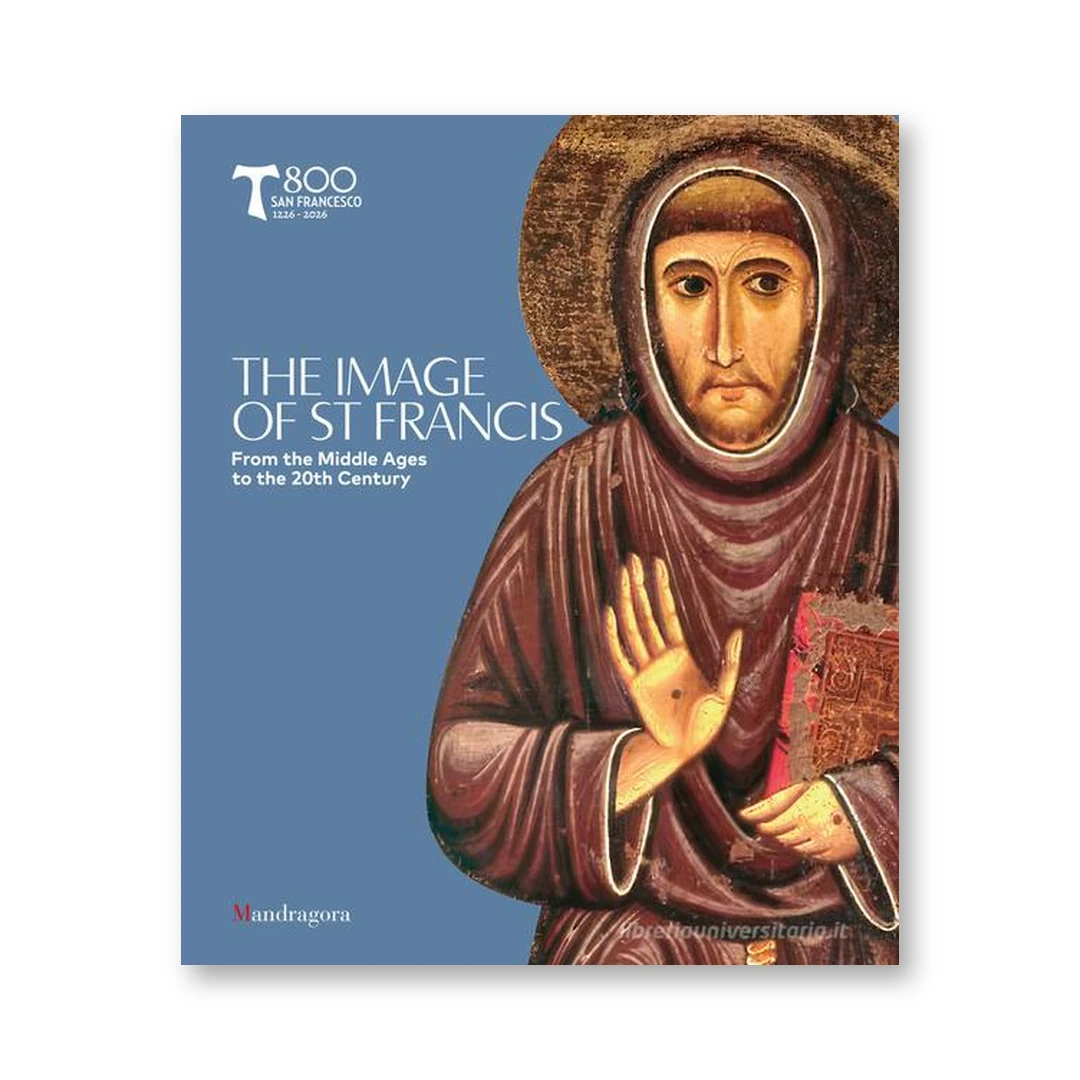
This scholarly exhibition catalog explores the remarkable evolution of the image of St Francis of Assisi across eight centuries of European art, tracing the changing ways artists have represented one of Christianity’s most influential saints. From the earliest medieval devotional panels to twentieth-century interpretations, the volume examines how religious belief, artistic innovation, and cultural memory shaped Franciscan iconography.
The study brings together works associated with major figures in Italian art, including Margarito d’Arezzo, Coppo di Marcovaldo, Cimabue, Beato Angelico, Sandro Botticelli, Andrea della Robbia, Federico Barocci, and Bartolomeo della Gatta. These paintings, sculptures, and other artistic expressions reveal the development of the saint’s image through the Middle Ages and Renaissance, from early representations emphasizing humility and devotion to increasingly elaborate expressions of spiritual experience.
The later chapters explore the dramatic transformation of religious imagery during the Baroque period, when the wilderness of La Verna, the reception of the stigmata, and the saint’s mystical visions became powerful subjects for artists such as Guercino, Pietro da Cortona, and followers of Caravaggio. The changing landscape itself emerges as an essential element of Franciscan imagery, reflecting new approaches to spirituality, nature, and artistic expression.
Edited by art historian Cristina Acidini, this richly illustrated publication examines the enduring influence of Franciscan spirituality on Italian painting and sculpture. It offers a valuable resource for readers interested in medieval and Renaissance art, Christian iconography, religious painting, and the artistic heritage of Tuscany.




Reviews
There are no reviews yet.