

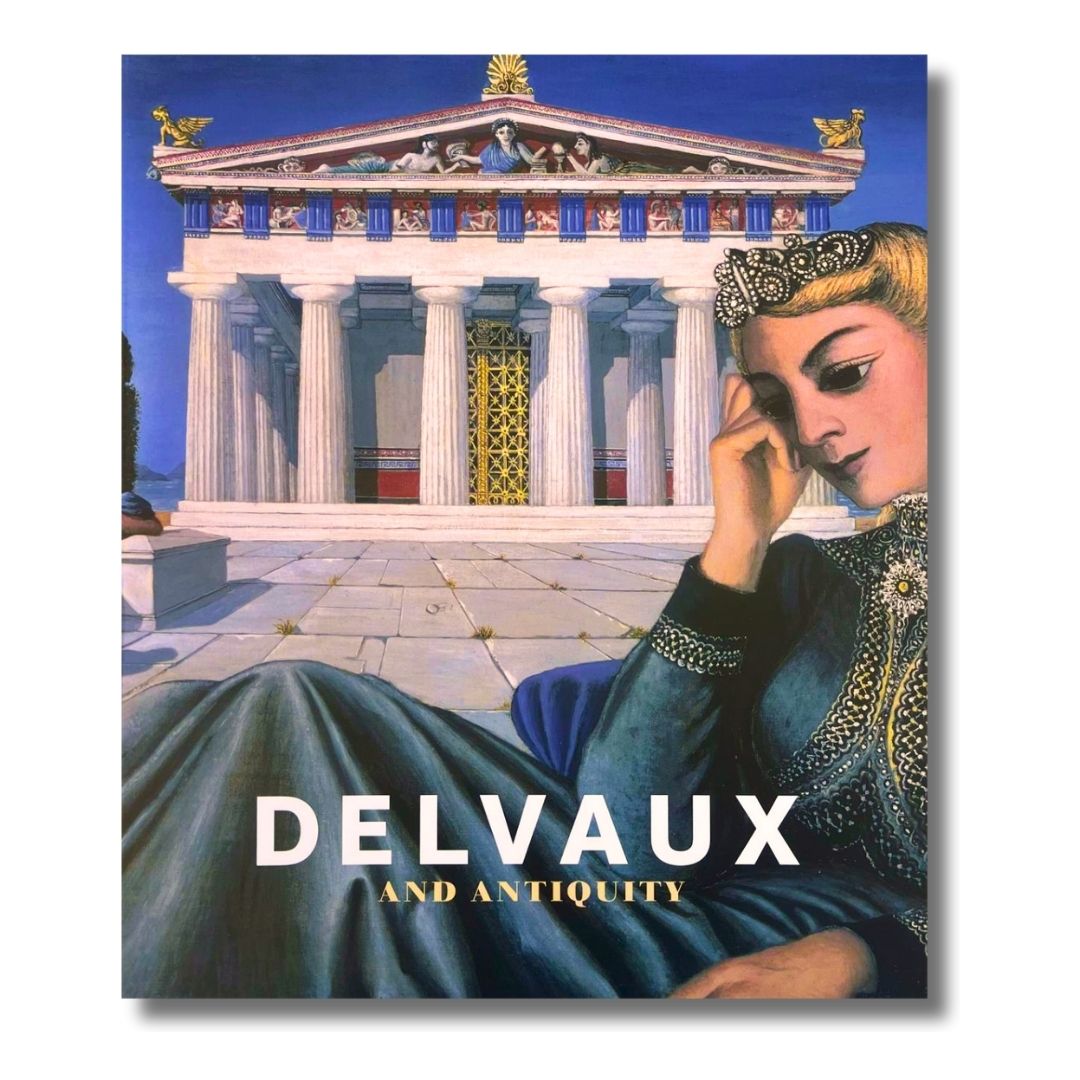
This richly illustrated exhibition catalog explores the enduring presence of classical antiquity in the work of Belgian artist Paul Delvaux (1897–1994). First emerging in the early 1930s, references to antiquity become increasingly central to Delvaux’s art after World War II, particularly through his recurring vision of the “tragic city.” Ancient architecture, sculptural fragments, and archaeological settings form the silent stage on which his enigmatic figures appear.
Delvaux’s fascination with classical sculpture leads to a theatrical and emotionally charged representation of the human body. His paintings and drawings evoke mythological figures such as Pygmalion, Venus, and Penelope, alongside sirens, ephebes, and hamadryads. These timeless beings inhabit dreamlike spaces that blur the boundary between past and present, memory and imagination. Antiquity, in Delvaux’s work, is not treated as historical reconstruction but as a poetic and psychological landscape.
The catalog also addresses the importance of specific sites that shaped Delvaux’s vision, including ancient temples and cities such as the Acropolis, Olympia, and Pompeii. These locations, visited during his travels to Italy in 1937 and 1939 and his journey through Greece in 1956, deeply influenced his artistic vocabulary. Alongside this classical inheritance, the book highlights a key emotional dimension of Delvaux’s reception of antiquity: a sense of melancholic withdrawal that permeates his work.
Published in conjunction with an exhibition bringing together more than seventy paintings and drawings, this volume offers a nuanced perspective on Delvaux’s engagement with antiquity and its place within his singular form of Surrealism. Now out of print, this well-preserved 2009 edition has become increasingly difficult to find and is valued as a rare and collectible exhibition catalog.


Reviews
There are no reviews yet.