
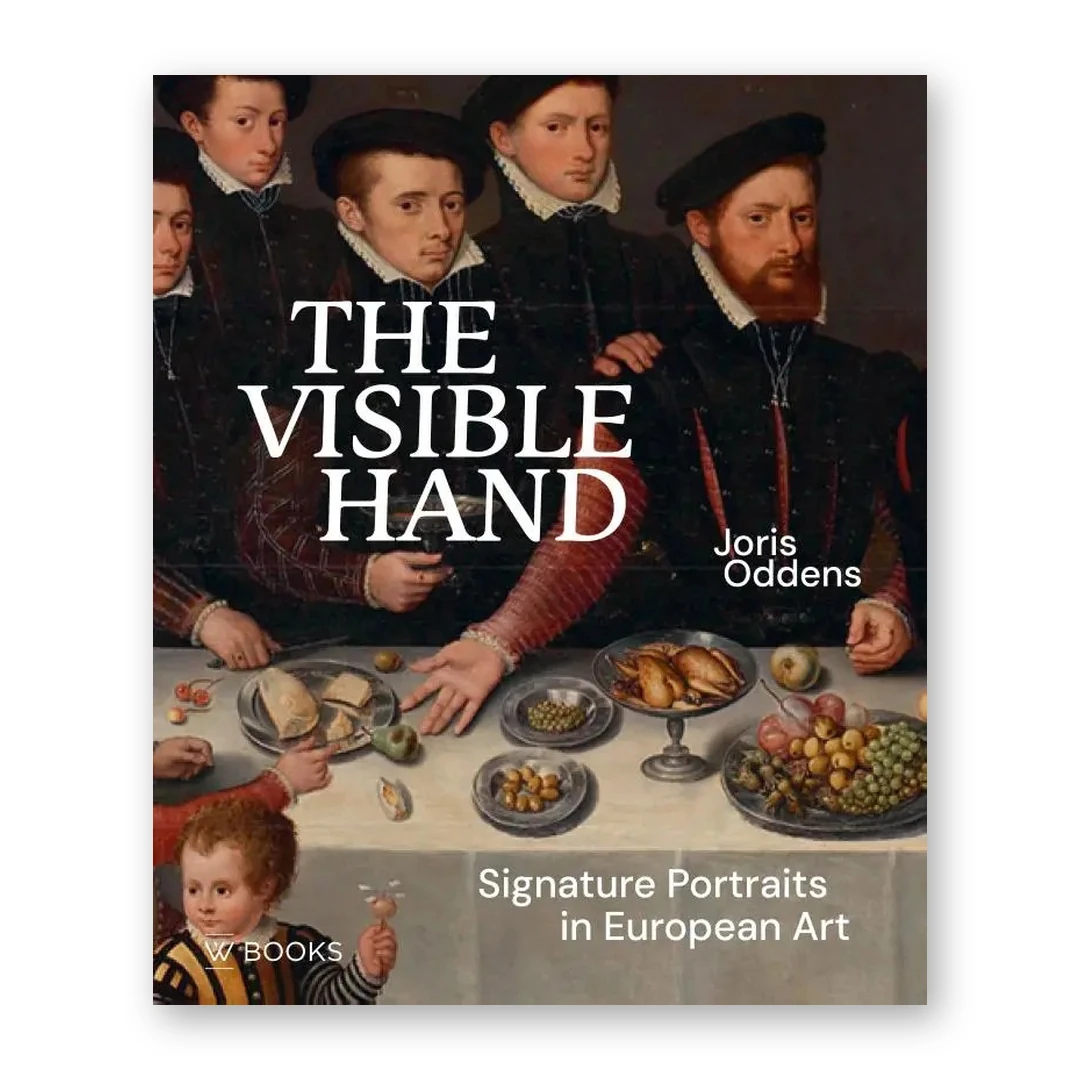
The Italian Renaissance, the Flemish Primitives and the Dutch Golden Age share a common visual language, and hands speak loudly in it. In religious scenes, family pieces and civic group portraits alike, one gesture recurs again and again: the active, open hand. Scholars have read it as a gesture of speech or presentation, or dismissed it as mere convention. Joris Oddens argues that these readings miss the point.
Combining close looking with historical research into the backgrounds of a large number of works, Oddens shows that the open hand draws attention to the people behind a painting: its artists, patrons and initiators. Portraits using the gesture work, in effect, as signatures. The argument opens new perspectives on Giotto, the Van Eyck brothers and Rembrandt, and runs through a rich gallery of Dutch seventeenth-century portraits by Frans Hals, Bartholomeus van der Helst, Govert Flinck, Jan de Bray, Paulus Moreelse, Joachim Wtewael and Frans Pietersz de Grebber, from civic guard group portraits to pendant portraits of married couples. Technical research on Hals’s Banquet of the Officers of the St George Civic Guard (1616) adds a telling detail: two of the three officers who now show an open hand were first painted with a hand on the chest.
The gesture can also bring to light commissioners whom written sources rarely record, women among them. Once you know what to look for, a museum visit is never quite the same.
Joris Oddens leads a research group at the Huygens Institute of the Royal Netherlands Academy of Arts and Sciences in Amsterdam and writes mainly on portrait painting.





Reviews
There are no reviews yet.